We Built a Calorie Tracker. College Athletes Changed the Question.
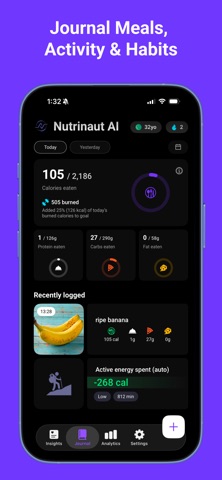
The first version of Nutrinaut answered a question that was easy to demonstrate: what is in this meal?
Point a phone at a plate, get a nutritional estimate, and make food logging less tedious. We were building in the same category as Cal AI. The appeal was obvious enough that a short video could explain it without a tutorial.
The harder question took longer to find: why would someone keep opening our app after the demonstration was over?
That question eventually took us from food creators to college athletes, and from calorie logging toward sleep, training load and recovery. This is the story of that change. It is a founder’s account of our own project, including the parts we have not managed to turn into a repeatable business.
A good demonstration is a starting point
Our iOS listing records the first release on 20 September 2024. Nutrinaut’s Android listing records 31 December 2025. Those are store release dates, rather than the beginning of every feature that exists today. The product has changed considerably between them and since. Nutrinaut for iOS, Nutrinaut for Android.
At the beginning, food scanning gave us a clear way to show the product. A creator could point the camera at a meal, show the app’s estimate, and return to the video. The audience did not have to imagine an abstract benefit.
But a photograph cannot establish the exact weight of a portion or reveal every ingredient. We still needed people to review and correct an estimate. Making entry faster did not remove the work of making the record useful.
We also had to find people who wanted that record in the first place.
We started with a feature and went looking for its audience
Fitness influencers seemed like a natural route. Their audiences were already interested in food, training and physical progress. In practice, the collaborations we explored could be expensive for a small app team. We needed more than attention to make those costs sustainable.
For our budget, the question was whether a collaboration could bring sustained use at a cost we could support.
Our move toward college athletes was partly about distribution, but it exposed a product question as well. An athlete can care deeply about performance without wanting another calorie tracker. Training, sleep, travel, classes and food all belong to the same day. A meal is one part of that day.
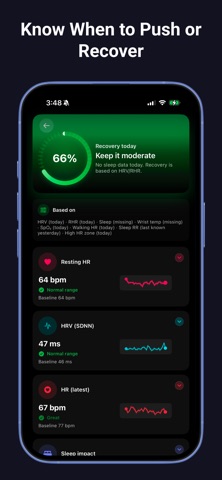
The more useful question for us became: could Nutrinaut help someone understand that whole routine, using data from a device they already wore?
The athlete’s day gave the app a place to belong
One concrete example is BB Kickers’ “DAY IN THE LIFE || COLLEGE ATHLETE GAME DAY,” published on 3 September 2025. It contains a Nutrinaut link in the description. See the collaboration.
The value of this format was its setting. Viewers came to see an athlete’s day. Food, activity and recovery could appear as parts of that routine, with a reason for the app to be on screen.
There is a useful piece of evidence beyond the view counter. In October 2025, soccer creator Ateh4 contacted us after seeing the BB Kickers integration. That exchange survives in our collaboration correspondence. Ateh4 subsequently published his own video on 25 October 2025, with a Nutrinaut link. Ateh4’s video.
That does not prove how many viewers installed or paid for the app. It does show that one collaboration reached another relevant creator and prompted a real conversation. For a small team, that was a more concrete signal than a vague claim about awareness.
The product moved beyond the plate
Nutrinaut still includes food logging. The change was in what we asked it to do within the larger product.
The current Android app brings supported health records into a broader view of the day. Food and workout logging can sit alongside sleep and activity information. On Android, Health Connect is one route for those records; Garmin has a separate account connection where offered. Exactly which records arrive depends on the source, permissions and app version. Our connections and data guide.
We also added tags for events that sensors cannot describe on their own: a late meal, a stressful day, feeling unwell, or another event someone chooses to record. The point is to preserve context, then consider it alongside the available observations. A tag followed by a different reading does not establish the cause of that change.
This was a more demanding product to build than a food-scanning demonstration. A missing sleep record, a delayed sync or two overlapping activity sources can change the meaning of a dashboard. The software has to account for those problems before its explanation can be helpful.
It also gave us a clearer reason to exist: helping a person make sense of an active day, rather than asking them to maintain another isolated log.
What worked, and what we still could not scale
Athlete collaborations gave us a promising setting and some encouraging results. We have not turned those results into a channel we can reliably expand at the same economics.
That distinction matters. A video can look right, reach a relevant audience and produce useful feedback without proving that the next ten collaborations will work. Creators have different audiences. Publication can take longer than expected. The product itself keeps changing while the campaign is being prepared.
Looking back, I would make three decisions earlier:
- Define the situation before choosing the creator. A meal-scanning feature is easy to show. The viewer still needs a reason to use it tomorrow.
- Treat audience fit as a product question. Moving toward athletes taught us something about the job the app should perform, not just whom to contact.
- Keep the evidence at its actual level. A view is attention; a creator contacting us is a response; neither is a paid subscriber.
Nutrinaut’s direction became clearer when we stopped treating the product demonstration as the whole story. The athlete’s routine was the story. Our job was to build something useful enough to belong in it.
About this account: I work on Nutrinaut at Origin Labs. The early product direction and lessons here are my recollection of building it; public release dates and linked videos provide independently checkable reference points. This is not an independent review of the app.