From TikTok to Athlete Routines: What We Learned Marketing Nutrinaut
The most flattering number in an influencer campaign is usually the easiest one to find.
Open the post, look at the view counter, and the campaign appears to have a result. For an app team, the more useful questions start after that: did the viewer understand what the app does, did they have a reason to try it, and did it deliver the experience the video promised?
Our work on Nutrinaut took us through TikTok and Instagram before longer YouTube integrations became a more promising fit. We also moved toward athlete routines, especially the “day in the life” format.
These are lessons from our own collaborations, rather than a controlled comparison of the platforms. The published videos and surviving briefs give us a record of what we tried.
Short-form made the feature easy to show
Nutrinaut began with a demonstration that belonged naturally in short video: show a meal, scan it, show a nutritional estimate.
There is very little explanation required to understand the interaction. That made food content a practical place to start. A creator could introduce the app during something the audience was already watching.
The limitation was what happened around that moment. A viewer might remember the food, the creator or the punch line and still have little interest in keeping a food log. The app could be visible without its longer-term purpose becoming clear.
Moving from TikTok to Instagram did not, by itself, settle that problem. A different platform can offer a different audience or distribution pattern. It cannot supply a missing reason to use the product.
For us, the better question became: what could the creator show that would make the app matter beyond one interaction?
The short-form campaign I still remember
One of our most memorable collaborations was with Donnie Otero, @thatcrazysubguy, a creator known for making sandwiches. TikTok, Instagram. I remember the TikTok and Instagram posts reaching roughly three million combined views. That is my recollection of the campaign; combined platform counters can include repeat plays and people seeing more than one post.
The demonstration clearly attracted attention. What we still needed was a dependable connection between that attention, sustained app use and the cost of commissioning the next campaign. A large counter did not settle those questions for us.
Why the athlete’s day changed the brief
A day-in-the-life video has a sequence already built into it: waking up, eating, training, travelling, resting. The app does not need to carry the entire video. It needs to do something understandable at the right point in that sequence.
That mattered as Nutrinaut developed from food logging toward recovery and daily health insights. A longer video gave a creator room to introduce an observation, show the app and return to the routine later. The viewer had more context for what they were seeing.
This is why I found YouTube more promising for this particular product. It is not evidence that viewers on other platforms never listen or buy. It is a judgment about the format we could make with the creators we worked with.
Three public examples worth inspecting
The videos below are checkable examples of Nutrinaut appearing in creator content. Their descriptions link to the app. View counts were captured on 3 November 2026; these are public lifetime counters, not unique viewers, attributed installs or customers.
| Creator | Video | Published | Public views when checked |
|---|---|---|---|
| BB Kickers | DAY IN THE LIFE || COLLEGE ATHLETE GAME DAY | 3 September 2025 | 66,931 |
| Ateh4 | Day In The Life Of A 19 Year Old Footballer In America | 25 October 2025 | 1,127 |
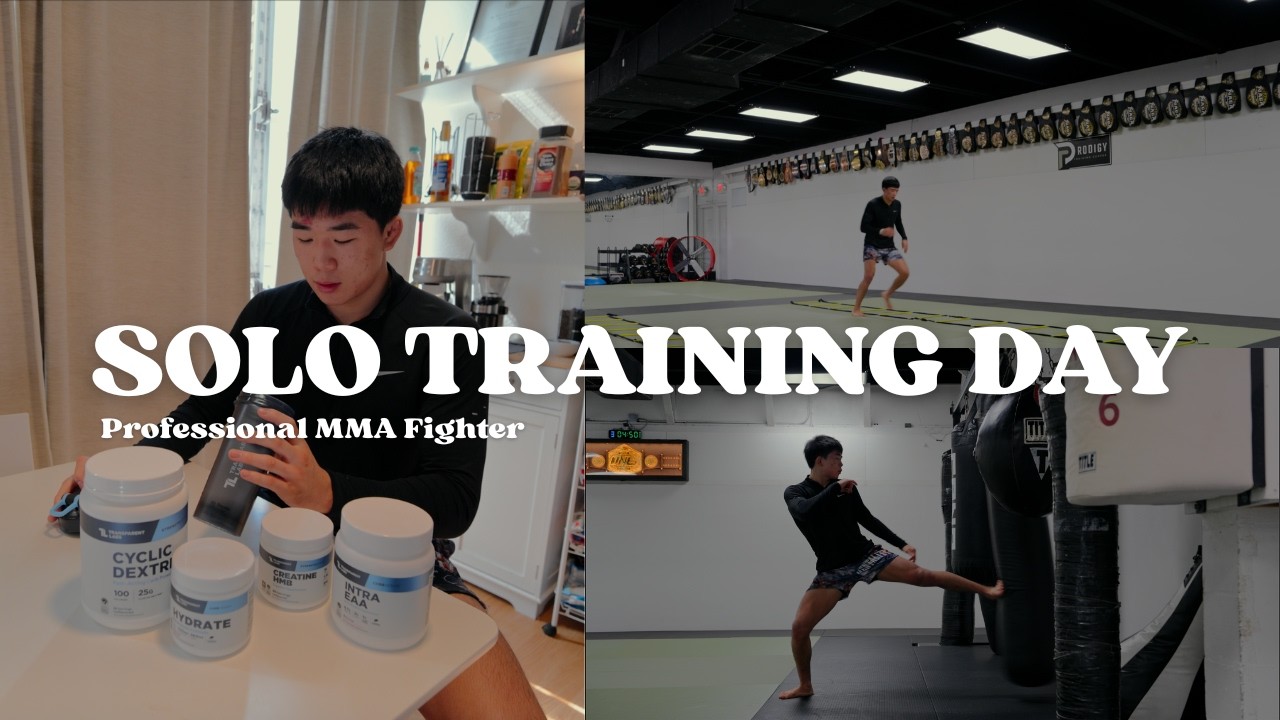
| Adrian Lee | Solo Training as a 19 y/o Pro MMA Fighter | 9 March 2026 | 294,620 |
Those are different creators and different situations. Adrian Lee’s video concerns professional MMA; it should not be described as a college-athlete campaign. Nor should a single view count be used to rank the business value of these collaborations.
The BB Kickers integration did produce one especially clear response. Ateh4 told us in correspondence that he had discovered Nutrinaut through it, then went on to publish his own integration. That is evidence of a connection between two creator relationships. We do not need to stretch it into a claim about customer acquisition to make it interesting.


Two appearances across one day
Our October 2025 production brief made the idea concrete. We asked for the phone to be filmed with a second device, an early meal-scan moment, and a later return to the app around a soccer session and recovery. In the BB Kickers reference, the moments we pointed to were around 2:23 and 10:53.
Those separated appearances gave the product a role across a routine. The second check-in could explain why someone might return to the app after the first scan. It also required care: the creator had to show an actual feature and describe what was on screen accurately.
The brief I would write now
I would start with the viewer’s situation and one real interaction, then leave room for the creator’s own routine.
A useful brief would answer five questions:
- Where does the app belong in this day? At breakfast, after a session, or during a later check-in?
- What will actually appear on screen? A real feature and an understandable result, rather than a list of everything the product offers.
- What needs explaining? A food estimate may need correction; a health insight depends on the available records.
- Where can the viewer go next? The right iPhone or Android link, with a landing page that matches the product shown.
- What happens before publication? A review of the integrated sequence, app links and any claims that need correction.
That final point is practical. Approving a few isolated clips is different from seeing how they fit into the finished video. A long delay between the initial brief and publication can also leave the creator describing an older version of the app.
The strongest integration still needs to sound like it belongs to the creator. Our role is to make the feature accurate and the next step clear, not to turn the entire routine into a scripted product tour.
Measure a chain, not a headline
For the next campaign, I would keep a simple record from the first conversation through publication and follow-up:
| Stage | What I want recorded | What it tells us |
|---|---|---|
| Published content | Exact URL, date, format and agreed placement | What actually went live |
| Attention | Views at a stated time and the platform’s definition | How much recorded exposure it received |
| Response | Tracked visits or link clicks where available | Whether some viewers took a next step |
| Product use | Attributed installs, activation and trial starts where reliably measurable | Whether the audience reached and used the app |
| Business result | Paid conversion, renewals, refunds and total collaboration cost | Whether the relationship can support further spending |
Missing attribution should stay missing. It is tempting to turn a rise in app activity near a publication date into an exact result for that creator. Without a reliable connection, it remains a possible explanation rather than a measured fact.
I would also keep TikTok and Instagram counters separate. Adding them can describe total recorded plays across posts, but it does not remove people who saw both.
Encouraging is different from repeatable
We found a format that made more sense for Nutrinaut: the app inside an athlete’s day, with enough room to explain its purpose. We had encouraging collaborations. We have not yet made that into a reliably scalable acquisition channel.
If I were starting again, I would put less weight on the largest counter and more on the complete path: the creator’s setting, the feature they can honestly show, the viewer’s reason to act, and the experience waiting in the app.
That path is harder to compress into a campaign headline. It is also much closer to what we need to understand before commissioning the next video.
Disclosure: I work on Nutrinaut and was involved in its creator marketing. The linked videos document published integrations. This article does not disclose private creator fees or claim that public views establish sales.